
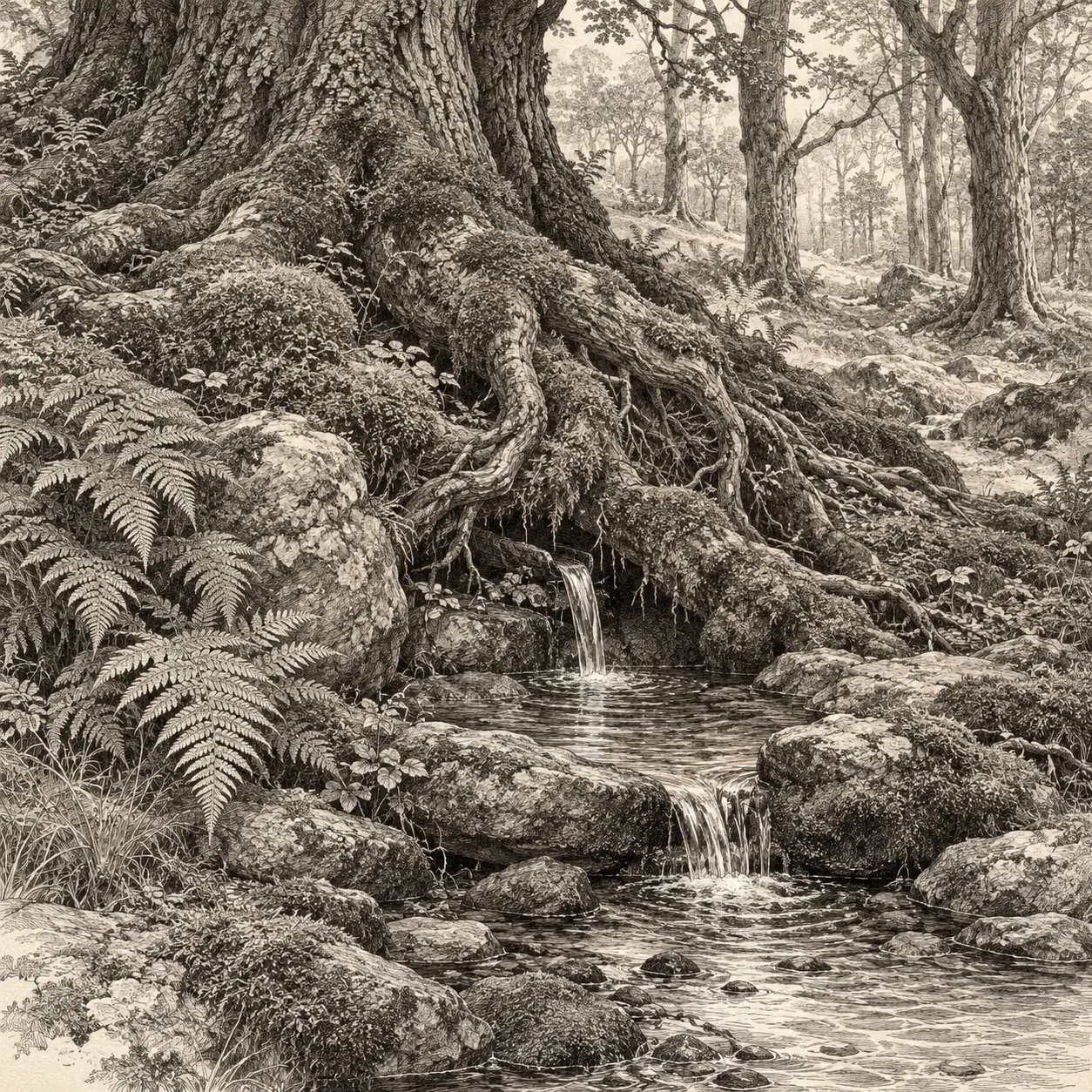
Worship does not occur everywhere. Place matters.
The Germanic religious world knew groves, springs, burial places, halls, enclosures, and other sites set apart by use, memory, or the presence attributed to them. Fyrnsegen does not assume that every such place is interchangeable, nor that sacredness is simply a feeling produced by an impressive landscape. Some places are holy because of what has occurred there; others because they have been deliberately set apart and maintained for religious use.
A household shrine, a cynn's regular place of worship, and a place associated with the dead carry different expectations. The space should suit the relation being addressed and the work being done there.
Ritual space is ordered, not merely decorated. Boundaries matter; so do approach, sequence, cleanliness, and the placement of those things used in worship. These forms are not ends in themselves, but they distinguish ordinary activity from religious action and give a rite a shape that can be recognised and repeated.
Repeated use also creates memory. Ground becomes associated with particular holy tides, offerings, meals, losses, thanksgivings, and the people who have stood there before; over time, a place gathers a history of its own.
Fyrnsegen does not require monumental temples in order to take sacred space seriously.
It requires places treated as though what happens there matters.
The central fire and the surrounding sacred field also find expression in the tácen of Fyrnsegen.