
The Name Fyrnsegen
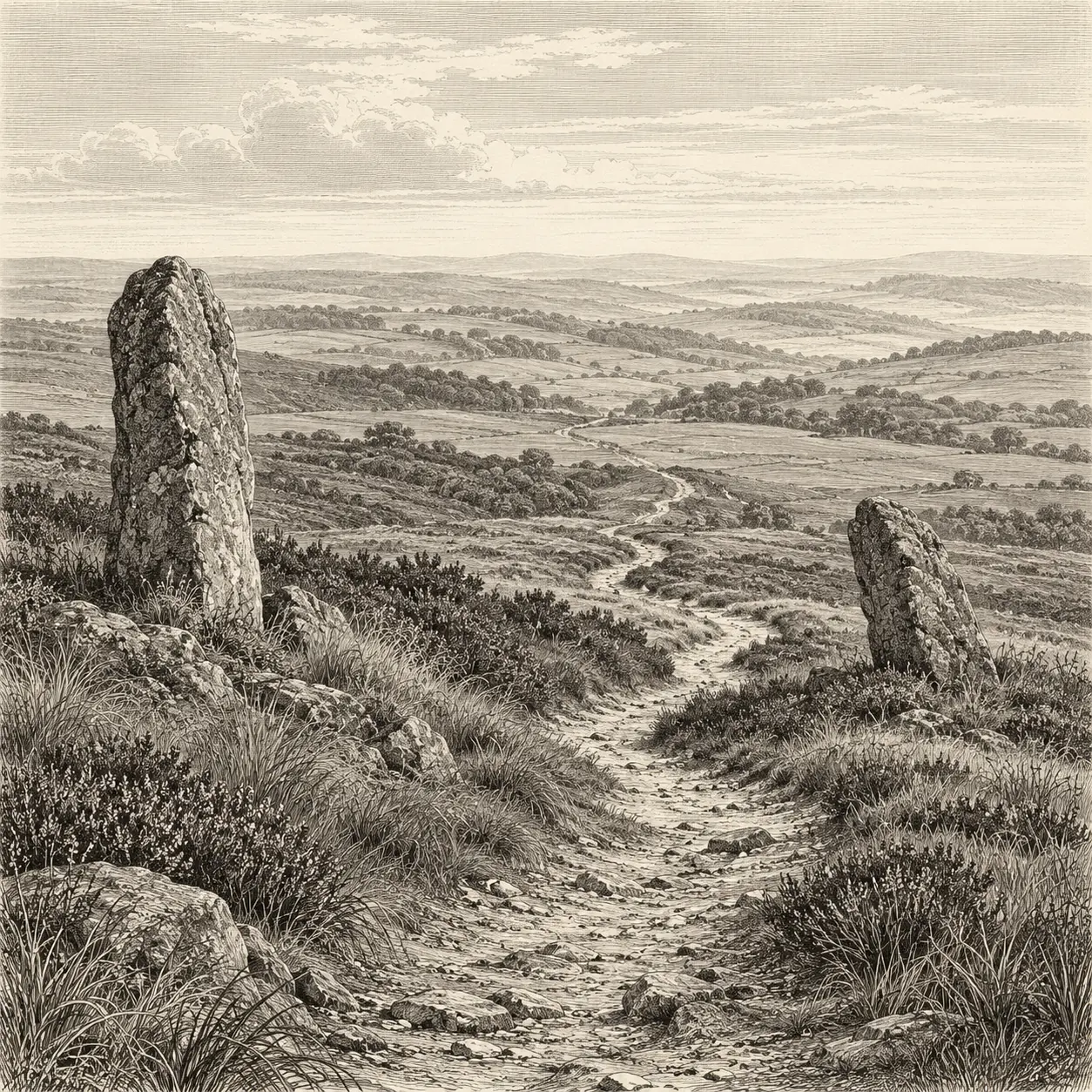
Fyrnsegen is an Old English word meaning ancient tradition. The name was chosen deliberately, not because Fyrnsegen claims an unbroken institutional existence stretching back into the Anglo-Saxon past, but because it describes the inheritance with which we are working.
The first element, fyrn, belongs to the remote past: former days, ancient memory, things received from an age beyond living recollection. Old English poetry uses fyrn- in compounds concerned with former days, ancient memory, and inherited tales; Allen J. Frantzen has observed that such words often evoke traditions that cannot be fully particularised. Their force lies partly in that distance: they point toward a past whose outlines remain visible even where its details have been lost.
That quality is important to us. Fyrnsegen does not begin from the assumption that the old religion has been preserved in a complete or recoverable form. Much of it lies in the distance of antiquity; what survives does so unevenly, in poetry and vocabulary, ritual terminology, law, archaeology, calendrical material, folklore, charms, place-names, and later accounts preserving traces of older practice.
The second element, segen or sægen, belongs to what is said, related, remembered, and handed down. It suggests not merely antiquity, but transmission: a fyrnsegen is something received from the old time, an inheritance carried forward through memory, account, custom, and surviving evidence.
This is the sense in which Fyrnsegen claims antiquity.
The tradition as we practice it today is modern. Its present institutions, its cynnas, its theological formulations, and many of its ritual forms belong to reconstruction and development undertaken in our own time; we make no claim otherwise.
What is ancient is the inheritance.
Reconstruction becomes dishonest when it confuses the age of its sources with the age of its present forms. Fyrnsegen does not claim that everything we do was done exactly as we do it now by the Anglo-Saxons; we claim instead that enough of the older religious inheritance remains to be studied, ordered, tested, and carried forward with seriousness.
Tradition is not made ancient by assertion, nor preserved merely by possessing old texts. It must be received, given form, and handed on.