
Gloucester, England · The Severn Country
Hwicce Cynn
In the land of the Hwicce
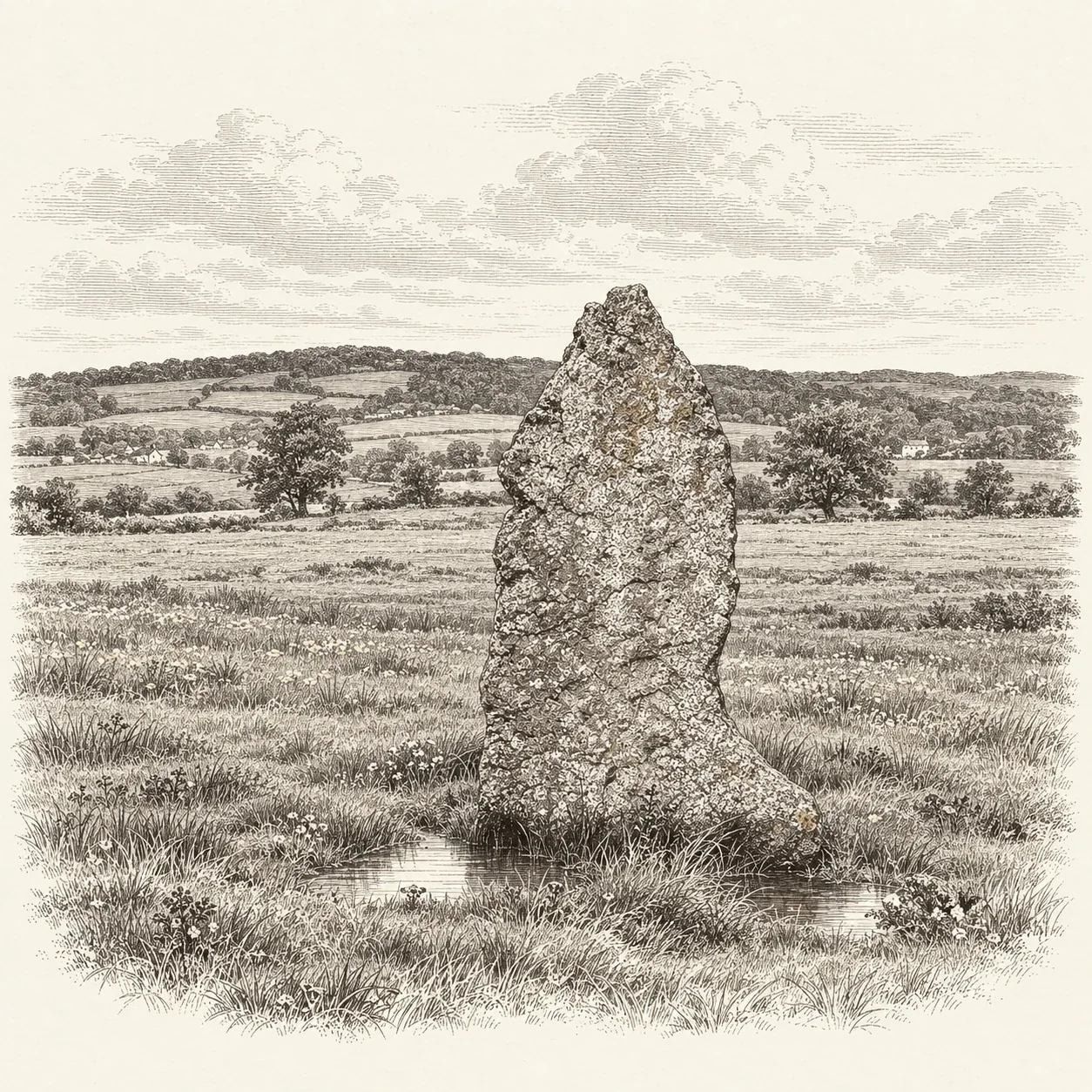
Severn slips seaward through silvering mist; hills hold their shadows where hidden paths turn. Winds wake the woodland and whisper through leaves; stone stands steadfast beneath storm-laden skies. Roots reach through darkness where rain fills the hollows; dusk draws its curtain on deep, tangled ways. Boughs bend above us beneath the broad sky; young kin keep faith and kindle the hearth.
In the Severn Country
Hwicce Cynn is based in Gloucester, Gloucestershire, England. It is the youngest of Fyrnsegen’s constituent bodies. We make our home in the ancestral country of the Hwicce; a land of river meadows, wooded hills, old stones, and paths that disappear beneath the trees.
Around Gloucester, the broad country of the Severn opens towards the hills. Fields and settlements lie within an older landscape whose folds can conceal as much as its heights reveal. A lane sinks between banks; a gap in the hedge gives onto a narrow path; beyond the familiar road, the wood closes round you.
This country rewards attention. Its character lies in the places we pass every day and in those we must make an effort to find; in changing light, wet earth, weathered stone, and the quiet beneath a canopy of leaves.
Here our cynn is taking root. We are still developing our practice, learning how to give the Fyrnsegen tradition a settled place in our common life.
The Land of the Hwicce
The Hwicce were an early medieval people whose kingdom was centred on the country now known as Gloucestershire and Worcestershire, extending into southern Warwickshire. Its precise boundaries remain uncertain, but Gloucester lay within their lands.
During the seventh and eighth centuries, the Hwicce had rulers of their own under the growing supremacy of Mercia. By the end of the eighth century, their kingdom had been absorbed more fully into Mercian rule. Gloucester’s association with them reaches into the seventh century, when a great hall stood at Kingsholm.
Their name also survived beyond the life of their kingdom. Wychwood, in neighbouring Oxfordshire, preserves an old association with the Hwicce; the form Huiccewudu appears in a charter dated 841.
These names bring an older country into view beneath the modern map. Rivers, settlements, woods, and ways connected people here long before our own households came to know them. In remembering the Hwicce, we give attention to one of the peoples whose history belongs to the ground beneath our feet.
The Name We Bear
Hwicce Cynn joins the name Hwicce with the Old English cynn: kin, kindred, or people. It names our present community through its relationship with the country in which we live.
To bear a local name is to accept an invitation to know the place more closely. Its history asks to be learned; its paths to be walked; its surviving names to be heard with some understanding of what they remember.
The name also turns our attention towards one another. A cynn grows through the relationships its folk sustain; through trust, hospitality, shared work, and obligations faithfully kept. Hwicce Cynn is the name under which we undertake that work here.
Young Roots in Old Ground
We are the youngest cynn within Fyrnsegen; our practice is still developing, and we cleave to the tradition. Its teaching gives direction to the work before us.
There is much to learn and much to establish. Study must become understanding; understanding must inform worship; and worship must find its place among the duties of ordinary life. We seek the patience to learn carefully and the steadiness to put that learning into practice.
A young cynn needs time to discover what its folk can sustain together. The keeping of a promise, the sharing of work, and the willingness to receive instruction all matter. Through such things, a community becomes capable of the responsibilities it hopes to bear.
Our aim is a settled life of piety in this country: faithful to Fyrnsegen, attentive to our surroundings, and strengthened by the bonds between our folk. The roots are young; we intend to tend them well.
Hwicce Cynn Today
Hwicce Cynn welcomes enquiries from those in Gloucester and the surrounding country who wish to learn about Fyrnsegen and the life of a developing cynn.
You need not arrive already familiar with the rites or the Old English words. Bring sincere questions, a willingness to learn, and respect for the people whose practice you hope to encounter.
If these woods, hills, and hidden places are part of the country you call home, and you wish to explore a life of piety here, reach out and introduce yourself. Tell us where you live and what has brought you to Fyrnsegen; a conversation is a good beginning.
We welcome those who wish to learn whether a place among the Hwicce Cynn may become their own.